
My Dissertation on the Apologetics of Aristides, Defended and Complete
… and also: a surprising discovery about my academic lineage

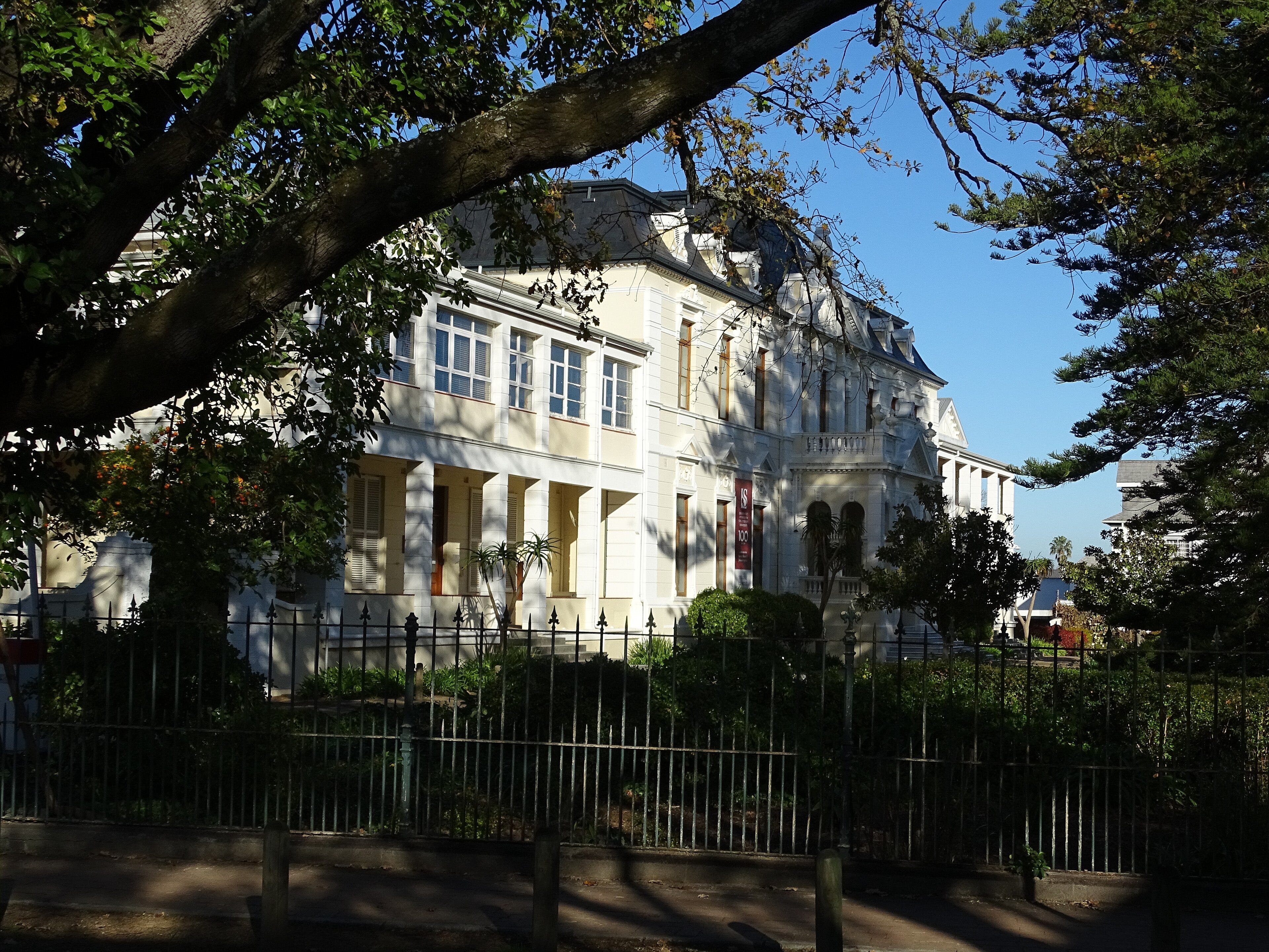
I began writing the dissertation for a second Doctor of Philosophy degree in June 2024 at British Library in London, with a fourth-century fragment of the Apologia of Aristides on the table beside me. Now, the dissertation has been defended and the degree completed.
For those who might be interested, I’ve attached my complete doctoral dissertation at the end of this post—but, before I get to the dissertation, I wanted to share some thoughts with each of you about (1) why I did what I did and (2) the surprising individual to whom my doctoral supervision now traces back.
1. Why a Second Ph.D.?
My reasons for pursuing this degree began in the late 1990s. That’s when I finally settled into a church position that paid enough for me to consider completing a doctoral degree. My goal was to earn a Ph.D. in church history, and I had selected classes throughout my Master of Divinity degree to prepare me for this possibility. I had even written the prospectus for my Ph.D. dissertation in church history already, which I adapted into my first published academic article, “John Calvin and the Problem of Philosophical Apologetics.” And yet, in the 1990s, every Ph.D. degree in church history that was offered required relocation, and God had clearly called us to serve First Baptist Church of Rolling Hills in Tulsa, Oklahoma, for the foreseeable future.
The only accredited and accessible research doctorate that could be completed without relocation at that time was—to the best of my knowledge—a Doctor of Education at The Southern Baptist Theological Seminary. This experimental Ed.D. was one of the first accredited seminary-based doctoral programs that students could complete without relocating. And so, I applied to this new program, and I was accepted into a cohort of a dozen or so fellow students.
Starting in the summer of 2000, I traveled from Tulsa to Louisville three times each year and participated in online learning experiences in between these modular seminars. The experience was truly transformative, and I completed a dissertation that was as historical and theological as it could be within the constraints of the program.
After I finished the program in 2003, I transferred all of my Ed.D. credits into a Doctor of Philosophy program and continued my education, rescinding the Doctor of Education degree to receive a Ph.D. in higher education leadership and administration. By the time I graduated with a Ph.D. from Southern Seminary in 2008, I was already a professor at Southern, teaching Christian education and family ministry.
That Ph.D. served me well, and it opened a door to write and to teach in the field of family ministry—but my desire to complete a Ph.D. in church history never diminished. Nevertheless, for more than a decade, adoptions and other responsibilities were far more important than my desire for any degree. And so, I continued to write and to teach in the fields of family ministry and apologetics, almost always with a historical focus, but without the degree in church history I had hoped to achieve.
Finally, in 2024, my wife and I decided together that it was time for me to do the Ph.D. in church history that I’d been unable to pursue in the 1990s and early 2000s. I had become somewhat obsessed with an overlooked second-century Christian apologist named Aristides of Athens, so his Apologia became the focus of my research. I had no desire to relocate, and I wanted to pursue a university-based degree instead of completing the degree through a seminary. Plus, I wanted my thinking to be challenged and refined by scholars who weren’t necessarily conservative evangelicals. The two institutions that seemed to provide the best opportunities in proportion to the cost were University of Pretoria and Stellenbosch University. I chose Stellenbosch University because Stellenbosch ranked slightly above Pretoria in research quality and research output, particularly in the humanities.
2. A Unexpectedly Distinguished Academic Lineage
Throughout the Ph.D. program at Stellenbosch University, I received outstanding guidance and feedback from my two co-supervisors, Dr. Lisel Joubert and Prof. Dr. Robert Vosloo. Any time that I needed guidance, both of them made time to meet with me via videoconference as well as answering questions through email. Dr. Joubert is a superb thinker when it comes to languages and ancient history, and Prof. Vosloo is a keen scholar of historiography, with expertise in the thought of Dietrich Bonhoeffer and Stanley Hauerwas as well. When Prof. Vosloo was in Boston for the Society of Biblical Literature in 2025, I was able to meet with him in person, and we shared many delightful moments at Luke’s Lobster Back Bay, at Thinking Cup coffee, and in the Boston Central Library in Copley Square.
After discussing Prof. Vosloo’s own doctoral supervision under Dirk Smit at University of the Western Cape, I decided to look up the supervisors and dissertations that comprised his lineage of doctoral supervision (which is now, I suppose, my academic genealogy as well). What I found was quite unexpected and exciting to me—so I hope you’ll enjoy this brief trip through generations of doctoral supervision as much as I did!
Robert Vosloo (1966–)
I finished my dissertation “Doing Civic Good without Bowing the Civic Gods: Aristides of Athens as Ecclesial Apologist” in 2026, under the co-supervision of Robert Vosloo and Lisel Joubert. Prof. Dr. Vosloo’s own dissertation was “Verhaal en moraal: ‘n kritiese ondersoek na die narratiewe etiek van Stanley Hauerwas,” written and defended in 1994 under the supervision of Dirk Smit at University of the Western Cape.
Dirk Smit (1951–)
Dirk Smit wrote his dissertation “Teologie as Antropologie? 'n Kritiese Beoordeling van die Transendentaal-Antropologiese Teologie van Karl Rahner” in 1979 under the supervision of Willem Jonker at Stellenbosch University.1 Three years after finishing his dissertation, Smit became one of the primary authors of the Belhar Confession.
Willem Jonker (1929–2006)
Willem Jonker wrote his dissertation “Mistieke liggaam en kerk in die nuwe Rooms-Katolieke teologie” in 1955 under the supervision of G.C. Berkouwer at Vrije Universiteit Amsterdam (Free University of Amsterdam). In 1990, Jonker famously confessed his participation in the sin of apartheid, to which Archbishop Desmond Tutu responded with an assurance of forgiveness.
G.C. Berkouwer (1903–1996)
G.C. Berkouwer wrote his dissertation “Geloof en openbaring in de nieuwere Duitse theologie” in 1932 under the supervision of Valentijn Hepp at the Vrije Universiteit Amsterdam. Although R.C. Sproul (1939–2017) never finished his Ph.D. dissertation, Sproul began his doctoral studies at Vrije Universiteit Amsterdam in 1964 under G.C. Berkouwer’s supervision and received his doctorandus there in 1969.2
Valentijn Hepp (1879–1950)
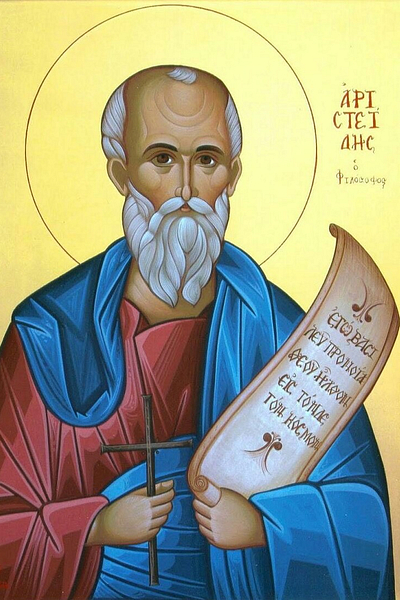
G.C. Berkouwer’s doctoral supervisor Valentijn Hepp wrote his dissertation “Het Testimonium Spiritus Sancti” in 1914 at Vrije Universiteit Amsterdam under the supervision of…
Herman Bavinck (1854–1921)
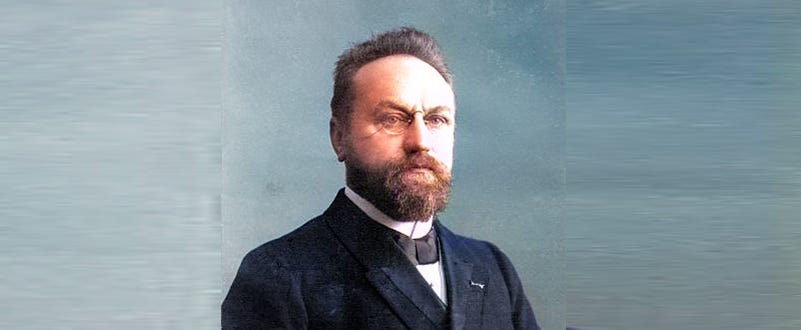
Yes, Herman Bavinck! Most of you who know me well know that Bavinck ranks alongside Augustine of Hippo and a small handful of others as one of my most esteemed theologians. Now, after completing a dissertation under the supervision of Robert Vosloo, I find that I have become a direct descendant of Bavinck’s doctoral supervision. Not only that, but there’s a bit of R.C. Sproul in the mix as well! For some of you, that might not particularly meaningful—but, for me, it was a surprising and delightful discovery. It’s also a reminder that some of these theological giants are far nearer to us in history than we might imagine.
Now, with that, here’s my complete, defended, and revised dissertation…
Robert Vosloo’s academic lineage through Dirk Smit actually traces back twice to Herman Bavinck. Dirk Smit’s other doctoral supervisor alongside Willem Jonker was Philippus “Flip” Theron, who completed his dissertation “Die ekklesia as kosmies-eskatologiese teken” in 1978 at University of Pretoria under the supervision of Johan Heyns, who was assassinated in 1994 by a white supremacist. Heyns’ supervisor for his 1953 dissertation “Die grondstruktuur van die modalistiese triniteitsbeskouing” was G.C. Berkouwer, who was supervised by Valentijn Hepp, who was in turn supervised by Herman Bavinck.
Doctorandus in the older Dutch system was granted after comprehensive examinations prior to the completion of the Ph.D. dissertation; doctorandus indicated that an individual was ready to write his or her dissertation. This qualification was roughly equivalent to the Master of Theology (Th.M.) in an American seminary or to the Magister Philosophiae (M.Phil.) in certain British universities.
Dr. Jones, I ministered up the road from Rolling Hills at Woodcrest! Not sure if you remember.
Anyway, I’ve been following you from afar for years now, your books and podcast. Even heard you speak at the D6 conference one year.
Currently in a PhD program at Midwestern.
Good work brother! 💪🏻👊🏻